The Great Crisis of the 21st Century Is Not Economic. It Is Relational.
Organizations do not fall ill merely due to strategic failures. They fall ill when the relationships that sustain their systems deteriorate. In a hyperconnected and emotionally fragmented world, the great crisis of the 21st century may not be economic — but relational.

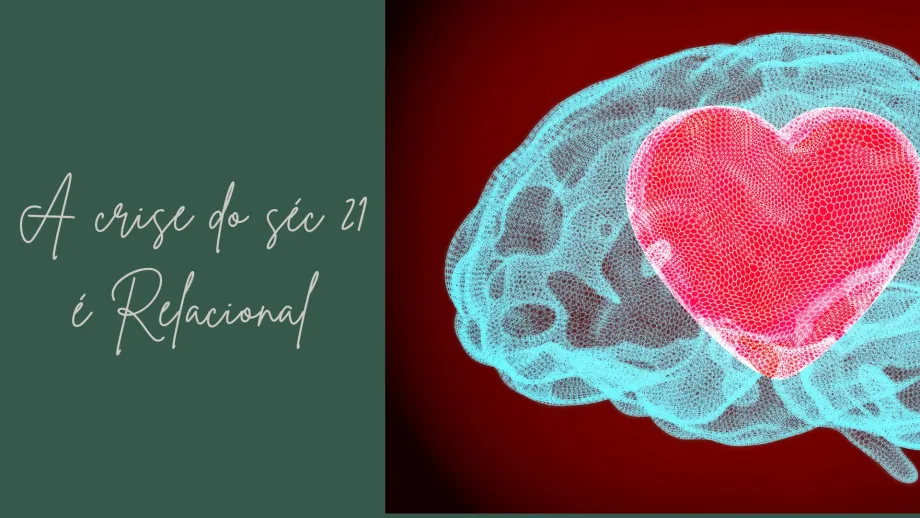
We have never been so connected to everything and so disconnected from ourselves! We have instant access to information, real-time communication, artificial intelligence capable of producing complex content in seconds, and technologies that expand our capacity for interaction on a global scale. Yet we live with a paradoxical reality: the more technologically connected we become, the more disconnected we seem to be from one another, from ourselves, and from the world we share.
The signs of this disconnection are everywhere. Rates of anxiety, depression, and burnout continue to rise. Polarization intensifies. Trust in institutions declines. Relationships grow more fragile. Organizations face increasing difficulty building genuine collaboration, retaining talent, and sustaining healthy cultures. In a world that has never produced so much knowledge, we are experiencing a growing scarcity of meaning.
We tend to analyze each of these phenomena in isolation. We treat mental health, depression, and burnout as individual problems, polarization as a political problem, low collaboration as a management problem, and loss of trust as an institutional problem.
"The opposite of depression is not happiness. The opposite of depression is vitality." — Marc Gafni
We are looking at the symptoms without understanding the disease. The great crisis of the 21st century is not economic, technological, or even political — it is relational. We are living through a crisis of fragmentation. Fragmentation between what we think and what we feel. Between who we are and who we believe we need to be. Between individuals and communities. Between organizations and their purpose. Between humanity and nature.
Fragmentation has become one of the defining characteristics of our era.
Internally, it manifests when people disconnect from their values, their emotions, their bodies, and their own human experience. We live in a culture that prizes productivity, performance, and results, yet frequently neglects the subjective dimension of existence. The result is a growing number of people who are outwardly successful and deeply exhausted within.
The psychiatrist Viktor Frankl warned that one of modernity's great afflictions would be existential emptiness. Carl Jung observed that what we fail to integrate into our consciousness tends to manifest in our lives as fate. Decades later, these reflections seem more relevant than ever.
Fragmentation does not remain confined to the individual — it inevitably spills over into relationships. When we lose the capacity to form deep bonds, relationships become superficial and transactional. The other person is no longer perceived as someone with whom we build meaning, but merely as someone with whom we conduct exchanges. Trust weakens, belonging diminishes, and cooperation becomes more difficult.
When these fragmented relationships multiply throughout society as a whole, entire systems begin to break down. This is a particularly important reflection for leaders and organizations.
For a long time — since the Industrial Revolution — companies were understood through a mechanistic logic. Structures, processes, metrics, and controls became the primary instruments of management. This approach produced significant advances, but it also created a dangerous illusion: the idea that organizations and their people function like machines.
They do not. Organizations are living systems — complex networks of relationships, meanings, emotions, narratives, expectations, and interdependent behaviors. Their results do not emerge solely from strategies or processes. They emerge, above all, from the quality of the relationships that sustain those systems.
Peter Senge, in his research on learning organizations, demonstrated that long-term performance depends on the ability to understand interdependencies — not merely isolated events. Fritjof Capra, in studying living systems, showed that life flourishes through relationships, not through isolated parts. Margaret Wheatley reinforces that organizations are, first and foremost, human communities in constant interaction.
From this perspective, one question becomes unavoidable: What happens when human systems are built on fragile relationships?
The answer is right before us:
- Exhausted teams.
- Overburdened leaders.
- Environments defined by fear and hypercontrol.
- Low capacity for innovation.
- Growing difficulty in collaboration.
- Silent conflicts that drain energy and undermine results.
What we call a strategic problem is often, in reality, a relational one. Trust, connection, and commitment are the clearest examples of this dynamic — they are among the most important assets of any organization and, paradoxically, among the least measured. When trust declines, the need for control grows. When control increases, bureaucracy expands. When bureaucracy expands, agility disappears. When agility disappears, the capacity for adaptation diminishes.
The result is a system that is slower, more costly, and less innovative — not for lack of intelligence, but for lack of trust.
Amy Edmondson demonstrated, through the concept of psychological safety, that high-performance teams are not those that avoid mistakes, but those capable of openly discussing them. Stephen Covey showed that trust reduces costs and increases speed. In both cases, the conclusion is similar: healthy relationships are not merely a human value. They are a strategic asset.
But perhaps there is an even deeper layer to this discussion. A layer rarely explored in the corporate world. The relational crisis is also a crisis of vitality. A crisis of EROS.
Throughout history, Eros has often been reduced to sexuality. In its broader understanding, however, Eros represents the force that drives connection, creativity, desire, meaning, and participation in life. It is the energy that moves us toward encounter, creation, and expansion.
When Eros is present, there is curiosity, creativity, and vitality. When Eros disappears, relationships become transactional. When relationships become transactional, systems lose vitality. And when systems lose vitality, they begin to decay — even as they continue to grow.
There are organizations that grow financially while losing their soul. There are companies that increase productivity while eroding belonging. There are leaders who accumulate power while losing their capacity for connection.
The problem is that no system can sustain this disconnection indefinitely. Sooner or later, the loss of vitality surfaces as exhaustion, conflict, turnover, loss of innovation, or an inability to adapt. That is why regenerating systems requires something far deeper than new management tools.
It requires the regeneration of bonds. The relationship with oneself, with others, and with the whole.
It requires leaders capable of developing self-awareness, emotional maturity, and presence. It requires cultures that cultivate trust, collaboration, and psychological safety. It requires organizations that understand that sustainable results emerge from the quality of the relationships sustaining the system.
For decades we believed that economic growth would be sufficient to produce human prosperity. We discovered it is not.
We can build more efficient companies and remain emotionally impoverished; develop extraordinary technologies and remain incapable of forming deep relationships; expand the intelligence of machines while degrading the quality of the bonds that sustain collective life.
The most important question of our time is not how to grow more, but how to reconnect.
Every sustainable regeneration begins precisely where fragmentation began: in the rebuilding of human bonds.