The return to the analog: why the craftsman's trade is our differentiator in the age of AI
In the age of AI, the true competitive differentiator lies in what only a human can offer: presence, sensitivity, and the craftsman's eye.

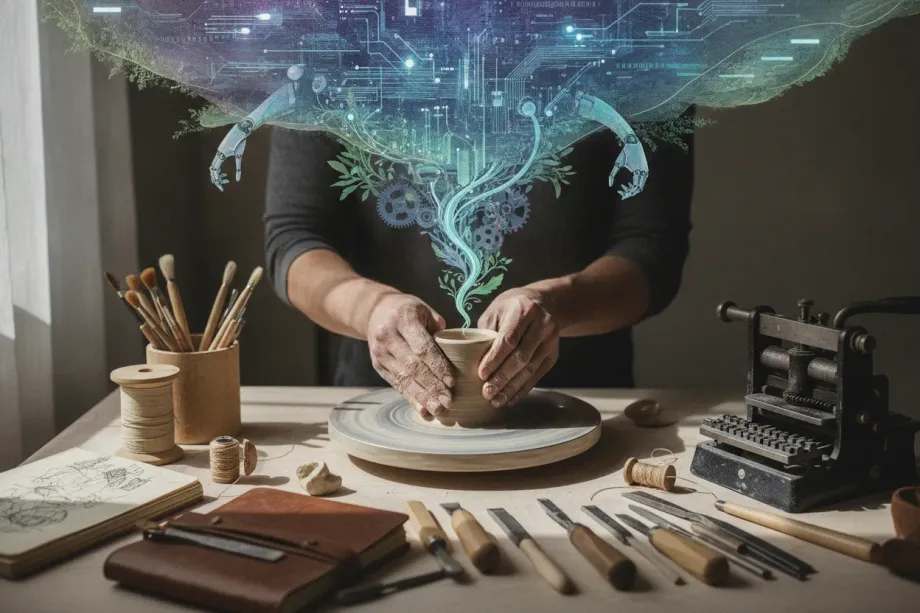
Some time ago, in a Strategic People Management course at Insead, I heard a provocation that carries even more weight today: we need to reclaim the principles of the trades and return, at our core, to the logic of craftsmen.
In that class, the professor pointed to two frontiers that define the human being. If the pincer movement set us apart from other animals through the ability to shape the world with precision — transforming us into the earth's greatest predators — it is “feeling” and our capacity for perception that distinguishes us from machines and will allow us to overcome the much-feared AI.
In a corporate environment dominated by Artificial Intelligence, where responses and deliverables are generated in seconds, returning to the analog is no longer nostalgia. It becomes a cognitive and strategic advantage. But the key is to break free from the automatism that this accelerated life has imposed on us.
The cognitive impact of the analog
Stepping away from the automatic flow of screens and reclaiming physical, in-person practices reorganizes the way we think:
- Deep attention: Writing by hand, sketching flows on paper, or handling physical objects demands a certain rhythm. This slows down distraction and strengthens memory and complex reasoning.
- Connection between hand and mind: The precise gesture “activates” brain areas linked to planning, patience, and real problem-solving. Never underestimate the power of a handshake and the classic “eye to eye” moment.
- Idea maturation: The digital eliminates friction. The analog restores the time needed for critical thinking and for original connections that algorithms do not anticipate. You know those in-person meetings where a colleague says “building on your point”... “expanding on your idea”... in online meetings, that is nearly impossible.
The value of the craftsman in business and leadership
AI scales processes, cross-references data, and accelerates execution. However, when everything becomes standardized and instant, what truly generates value becomes that which cannot be mass-automated.
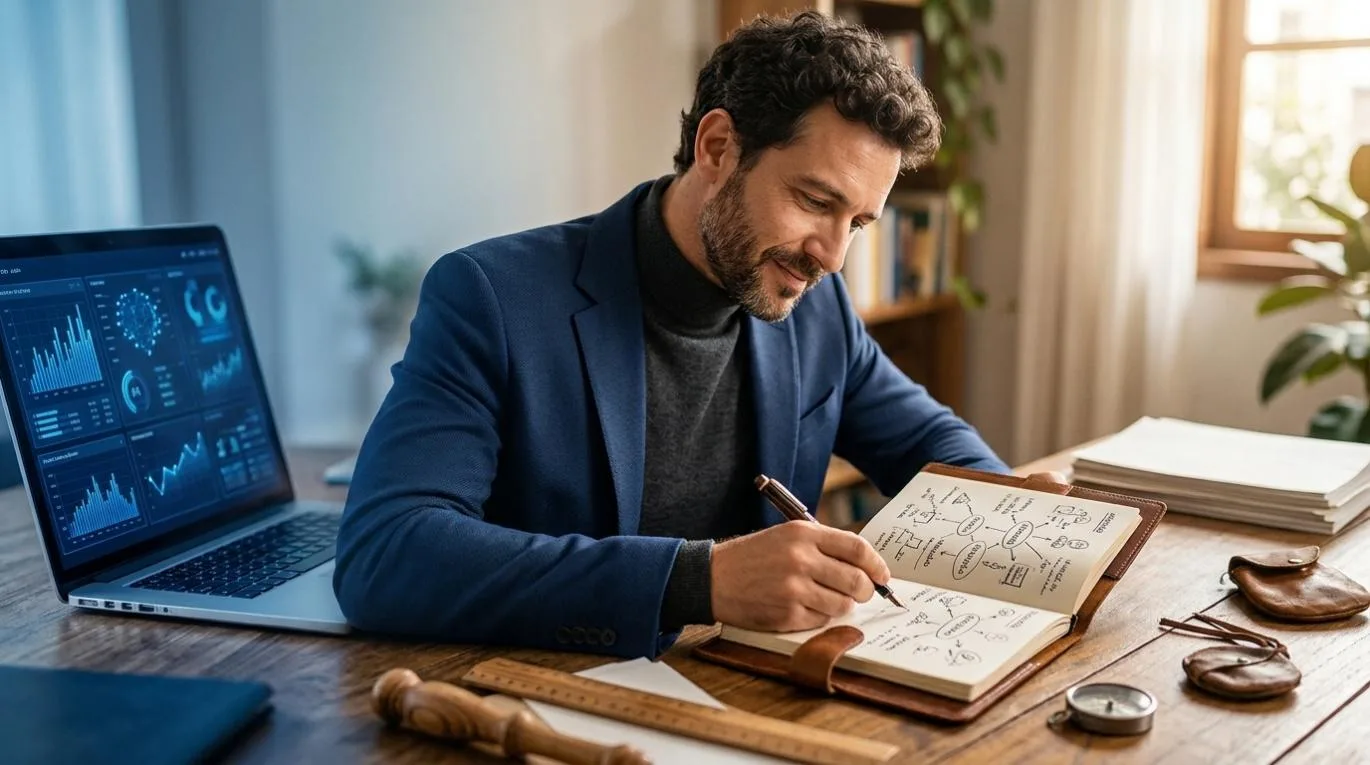
Bringing the craftsman's spirit into management and business means cultivating decisive pillars:
- Mastery of the fundamentals: The craftsman understands the raw material before picking up the tool. In leadership, this means deeply understanding the business, the customer, and the problem before delegating analysis to technology.
- Intention and care in the process: While the machine optimizes for speed, the craftsman safeguards the quality of every step. Lasting businesses are built with attention to the details that demonstrate respect for those who receive the product or service.
- Ethical judgment and contextual reading: Strategic decisions are rarely purely mathematical. They require sensitivity to read cultural nuances, manage tensions, and take responsibility for the choices made.
- Leadership through feeling and presence: Algorithms manage tasks, but they do not inspire people. Leading demands active listening, empathy, and genuine bonds — something that only emerges from human encounter, free of digital filters.
- Differentiation through the human signature: In a market flooded with generic AI-generated content and solutions, authenticity, authorial vision, and the human touch once again become high-value assets.
Perhaps the future of strategy lies not in competing with the speed of the machine, but in leading with the precision of those who have mastered their own craft and the sensitivity of those who truly understand people.
What matters is achieving a balance between a generation that values in-person contact, the handshake, and eye-to-eye connection, and another generation that does not know the value of these things — one accustomed to being shut within four walls and living in a virtual world. A middle ground between these two worlds may well be the balance of a productive working model, and it is worth exploring with your teams.
In your leadership or business routine, where do you feel the "craftsman's eye" is most needed today?