A star player doesn't make a team. A leader does
Having the best talent doesn't guarantee results: find out why the true leader is the one who makes the team actually work.


In 2000, Real Madrid decided to run an experiment: buy the greatest players in the world and bring them all together, without worrying too much about the rest. Between 2000 and 2003, Figo, Zidane, Ronaldo, and Beckham arrived. Just to sign those four, the club spent around 215 million euros. On paper, they were unbeatable. In practice, not so much.
The team won La Liga in 2001 and 2003 and the Champions League in 2000 and 2002. But once the squad was complete, the math stopped adding up: from 2003 to 2006, Real Madrid won no major titles, and that cost the president his job. In 2004, they lost the Copa del Rey final to Zaragoza 3–2, in a match Spain dubbed the Galacticidio.
What went wrong?
The stars were outstanding. What was missing was glue. Without the midfielder who protected the defense, many of the big names refused to track back and defend. Makélélé, who did that work, left for Chelsea in 2003. And manager Del Bosque, who knew how to manage the egos in the dressing room and maintain the group's culture, also departed that summer. Notice: the team didn't lose talent. It lost the people who made the game work.
Real had attackers to spare and no one to do the work that never shows up in the photo. This happens in companies all the time. You hire the best salesperson, the best designer, the best manager — all with high salaries and impressive résumés. Six months later, results don't come. Everyone plays for themselves, no one passes the ball, and meetings turn into arguments over who's right.
This is where the leader's role comes in.
Setting the lineup is the easy part. The hard part is noticing when the team isn't clicking — and acting before the scoreboard shows it. It's up to the leader to know who needs room to breathe, who needs to be reined in, and who is there to do the invisible work.
In radio, I experienced one of the best examples of this firsthand: Emílio Surita, from Jovem Pan. He led a team full of strong personalities and did the opposite of what Real Madrid did. There was no ego getting in the way. He knew when to pass the ball, who to pass it to, and he let others shine.
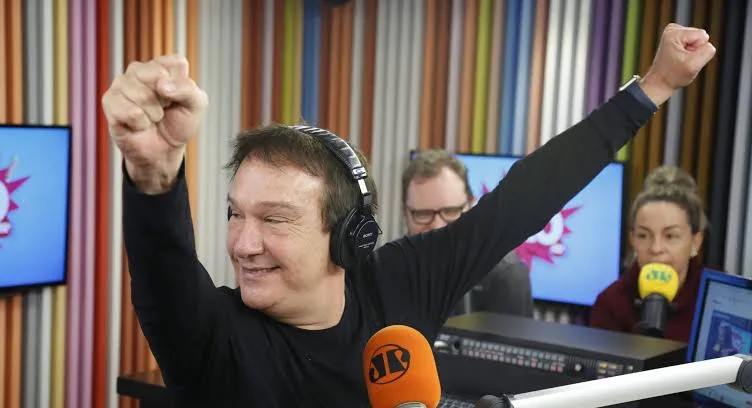
The result:
it was one goal after another. Not by chance, Pânico remains one of the highest-grossing programs in Brazilian media. A great team isn't the one with the biggest names. It's the one that knows how to play together — and someone has to make sure that happens. When was the last time you looked at your team and asked yourself whether it's truly a team or just a roster of stars?